
Many electrical infrastructure projects begin with a series of assumptions.
At the earliest stages of development, engineers are often working with limited information about site conditions. While assumptions can help move a project forward, access to measured site data allows decisions to be based on actual ground conditions rather than estimates.
This is particularly important when it comes to earthing design.
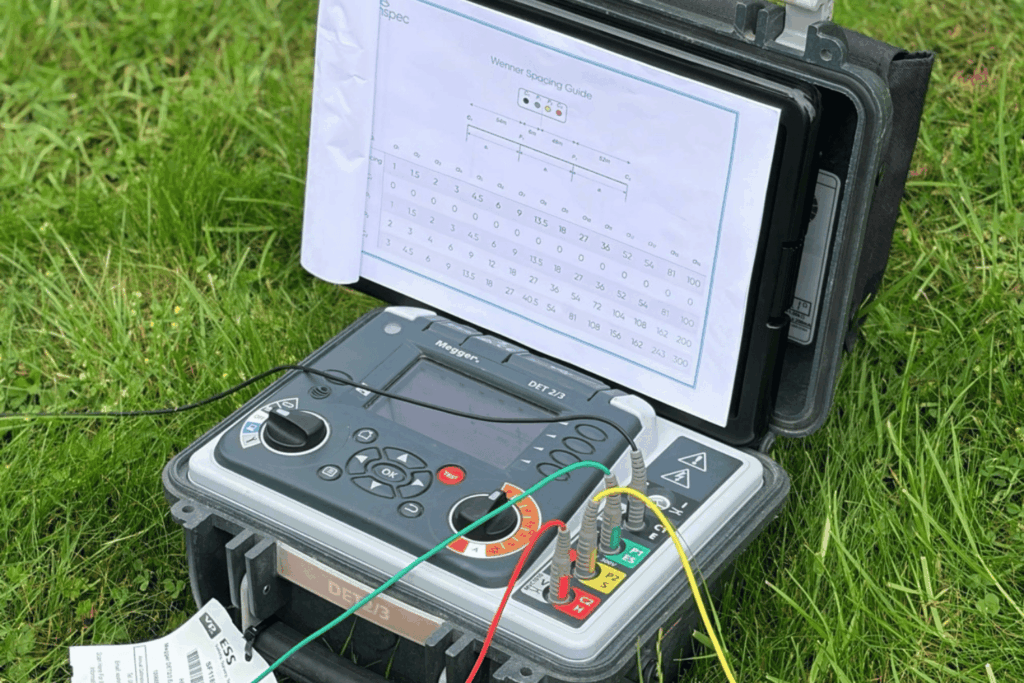
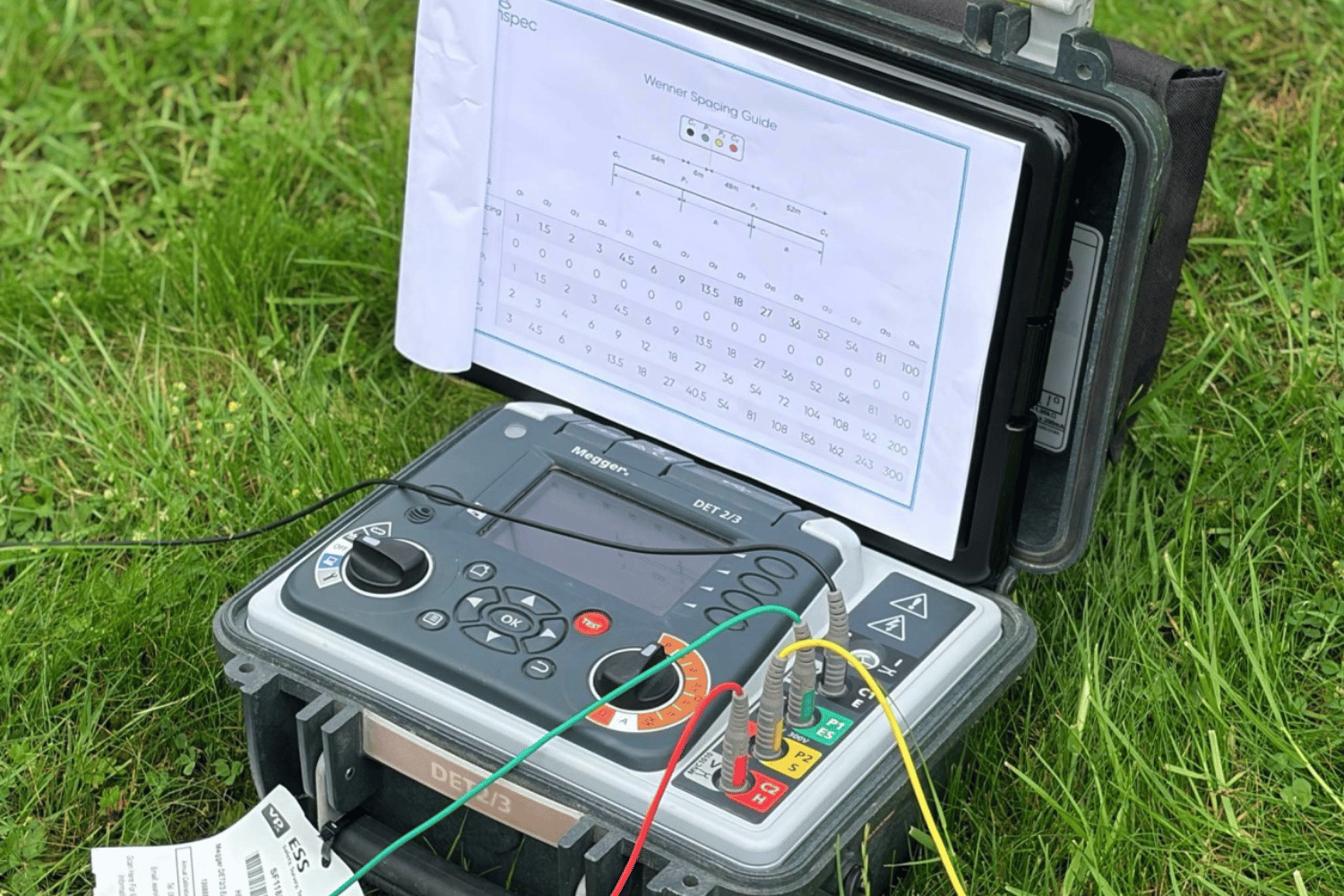
Soil resistivity testing provides engineers with information about how electrical current behaves within the ground. By carrying out testing early, project teams can develop a clearer understanding of site conditions and use that information throughout the design process.
Understanding Ground Conditions from the Outset
No two sites are exactly alike.
Ground conditions can vary significantly depending on soil composition, moisture content and temperature. Even within a single development, resistivity values may differ across different areas of the site.
Without measured data, engineers must rely on assumptions when developing earthing systems and supporting studies. Soil resistivity testing provides site-specific information that can be used to develop representative soil models and support engineering assessments.
Early testing helps establish a stronger understanding of the environment in which the electrical infrastructure will operate.
Read our guide to Soil Resistivity Testing here and learn how ground resistivity surveys are carried out.
Soil Resistivity Testing Supporting Accurate Earthing Design
Soil resistivity data is a fundamental input into earthing design.
The results are used to assess how electrical current will dissipate into the ground and to evaluate compliance with safety requirements relating to touch and step voltages.
Accurate site data helps engineers develop earthing designs that reflect actual ground conditions. It also supports the optimisation of conductor sizing and earthing layouts, which can have a significant impact on overall project costs.
By obtaining this information early, project teams can ensure that earthing considerations are incorporated from the outset.
Providing Valuable Inputs for Engineering Studies
Soil resistivity surveys are rarely carried out in isolation.
The data collected is often used to support a range of engineering studies, including:
- Earthing studies
- Lightning protection design
- Earth Potential Rise (EPR) assessments
- Electromagnetic interference studies
- High-voltage system design
Access to reliable site data at an early stage allows these assessments to be based on representative ground conditions and supports a more informed design process.
Learn more about Enspec’s Earthing Studies services.
Particularly Important for Large and Complex Sites
The value of early soil resistivity testing often becomes more apparent on larger developments.
Battery energy storage systems, renewable energy projects and substations frequently cover extensive areas where ground conditions may vary from one location to another.
In these situations, multiple test locations may be required to build an accurate understanding of site conditions. Early surveys provide the information needed to identify variations across the site and ensure they are considered during the design process.
Supporting Better Engineering Decisions
A soil resistivity survey provides more than a set of measurements.
The results help engineers develop soil models, assess electrical safety requirements and make informed decisions throughout a project’s development.
Typical deliverables include raw test data, interpreted soil models and recommendations that can be used within subsequent engineering studies.
By obtaining this information early, project teams can establish a stronger foundation for earthing design and wider electrical studies while ensuring decisions are based on measured site conditions.
Planning a New Power or Renewable Energy Project?
Enspec supports clients across the power sector with soil resistivity surveys, soil modelling and earthing studies for substations, battery energy storage systems, renewable energy developments, industrial facilities and beyond.
Contact our team to discuss how early soil resistivity testing can support your next project and wider earthing design requirements.