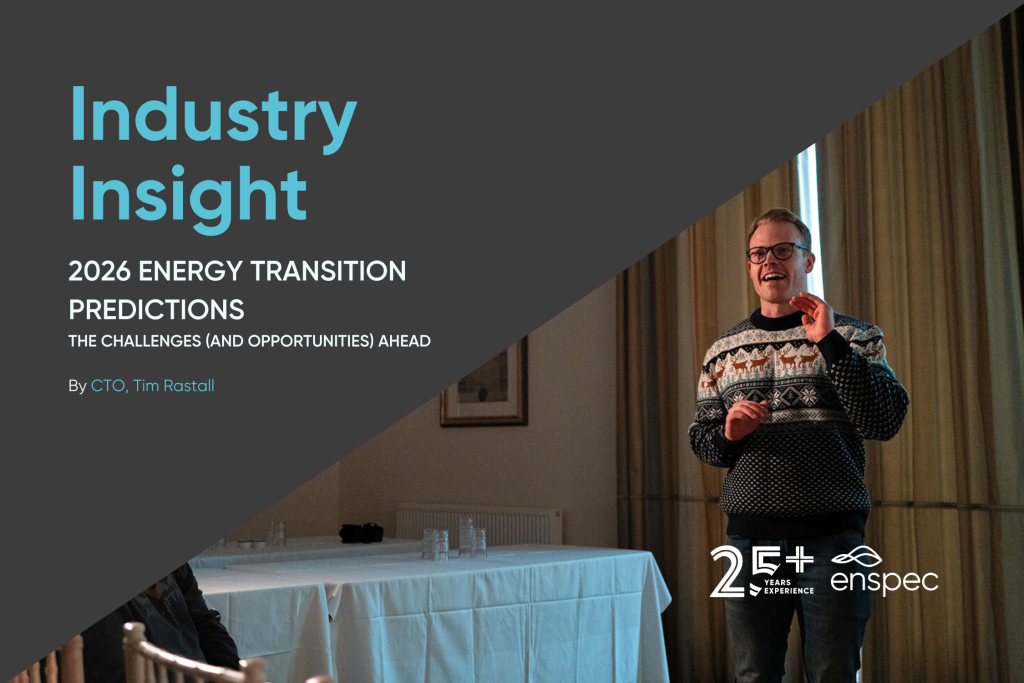

From higher-voltage infrastructure to grid stability and data visibility, 2026 will test how ready the UK energy system really is for the next phase of the transition, writes Enspec’s majority shareholder and CTO Tim Rastall
If 2025 was the year power quality moved into the spotlight, then in 2026 it will increasingly reshape how projects are designed, financed and delivered.
Based on current market behaviour and Enspec’s project experience, several challenges are set to define the year ahead.
Higher-voltage infrastructure will become the norm
The UK is entering an era where transmission-level connections are no longer exceptional.
More wind, solar and battery projects will connect at 132 kV and above, bringing larger project values, longer lead times and far greater technical risk. Organisations without proven high-voltage capability will struggle to compete or deliver.
This will drive consolidation around specialist partners with end-to-end expertise.
Grid stability will rival capacity as a market driver
National Grid’s growing focus on stability, inertia and frequency support is a clear signal of what’s coming next.
In 2026, projects will increasingly be judged not just on how much power they deliver, but on how they support the wider system. Assets that cannot demonstrate positive system behaviour may find themselves commercially disadvantaged.
The energy transition is moving from quantity to quality.
Grid metrics and real-time data will move centre stage
Demand for real-time insight into grid performance will accelerate.
The UK is likely to follow international markets in deploying new forms of grid metrics equipment, providing visibility into system strength and performance that has historically been unavailable.
This represents both, a technical challenge and an innovation opportunity, particularly for companies able to bridge power engineering with data-driven design.
Early-stage risk mitigation will separate winners from laggards
Developers and investors are becoming less tolerant of late-stage surprises.
In 2026, projects that integrate power quality, grid compliance and system analysis early will move faster and de-risk financing. Those that don’t will face higher costs, redesigns and programme delays.
Early engagement with specialists is becoming a commercial advantage, not an overhead.
Capability depth will matter more than headcount
As projects grow in size and complexity, shallow capability will be exposed.
Engineering depth, robust design processes, financial resilience and internal knowledge transfer will define which organisations can scale sustainably. Simply hiring more people will not be enough without structure, clarity and expertise.
The outlook:
2026 will reward those who understand that the energy transition is no longer just about building assets. It’s about integrating them intelligently into a constrained, dynamic and increasingly data-driven grid.
For the industry, the message is clear: power quality, grid stability and early planning are no longer optional. They are the price of progress.